
A static mixer can deliver continuous blending, dilution, dispersion, heat transfer or gas absorption without a motor, but it also adds pressure drop that your pump or compressor must pay for. By the end, you will be able to match the mixer to the duty, calculate the real operating trade-off and judge whether a supplier’s design is credible for your plant conditions.
Key takeaways
- Use pump pressure to mix without a motor, gearbox or rotating shaft.
- Match mixer geometry to liquid-liquid, gas-liquid or solid-liquid duty.
- Specify minimum, normal and maximum flow before selecting elements.
- Compare mixing uniformity against pressure drop, fouling and turndown limits.
How a static mixer creates mixing without a motor
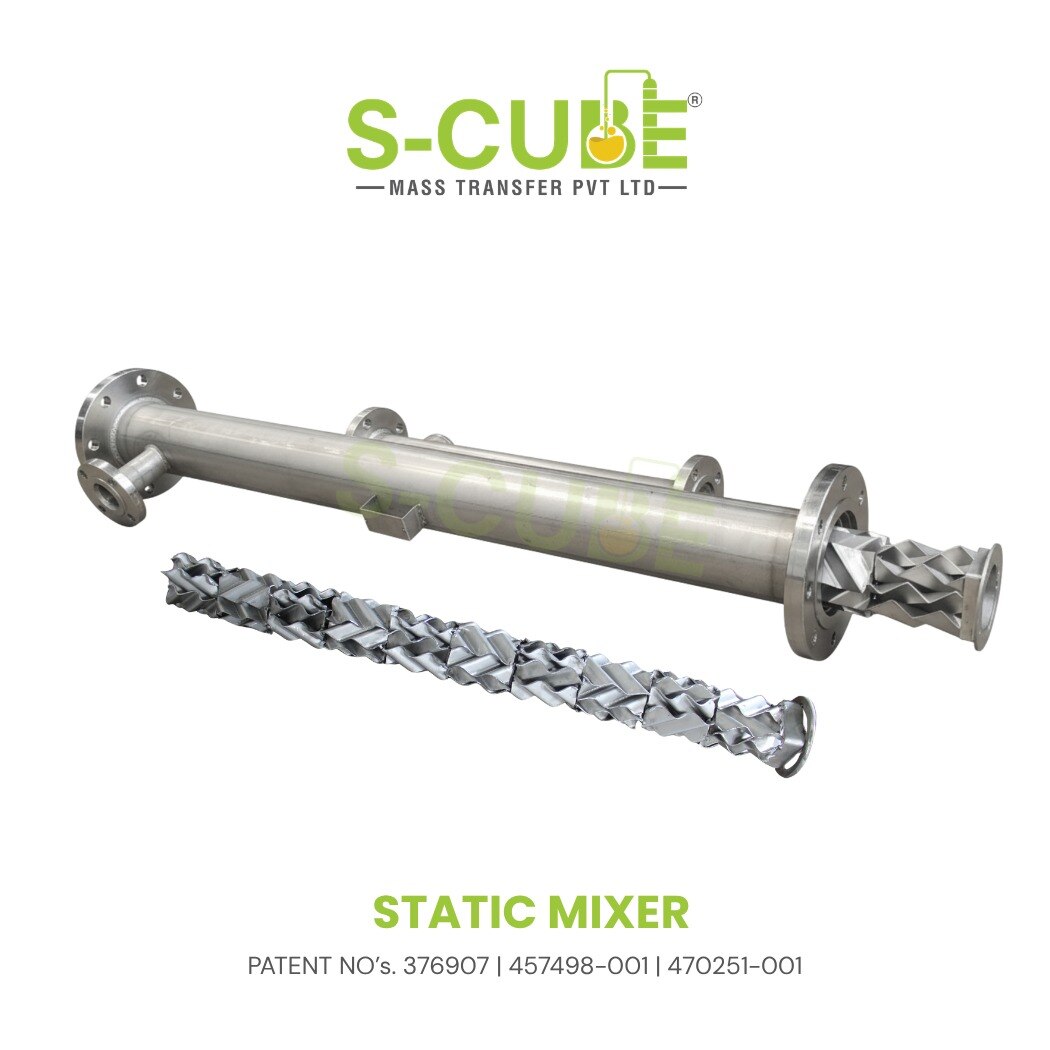
A static mixer turns pressure into mixing. Fixed elements inside the pipe repeatedly split and recombine the moving stream, changing direction and stretching the interfaces between fluids. The pump supplies the energy; no rotating drive train is needed.
The result is uniform composition or dispersion along a continuous line, but not for free: the mixer adds pressure drop.
| Option | What it does | When it is more practical |
|---|---|---|
| Static mixer | Blends, dilutes, conditions or disperses a flowing stream | Continuous lines with pressure head available |
| Agitated tank | Mixes within a vessel over a controlled residence time | Batch recipes, frequent changes or solids suspension |
| Rotor-stator mixer | Applies high shear through a driven rotor | Emulsification or intensive dispersion |
| Recirculation loop or eductor | Returns or entrains fluid to improve tank mixing | An existing vessel and pump system can support the extra circuit |
Static mixers for process plants make the strongest case when the pipeline already carries continuous flow for inline dosing, neutralization, heat-transfer enhancement or gas dispersion. They are less practical when the duty is long residence time, the process runs intermittently, or the stream rapidly fouls the elements.
Compare annual pumping energy, cleaning time and downtime with the alternatives. The main static mixer benefits are compactness and continuous operation, not zero operating cost.
Match the mixer to the duty and the phases
The case for static mixers for process plants is strongest when streams already move through a pipeline and need continuous blending, dilution, reaction-feed conditioning, heating or phase contact. A pump must also provide enough pressure margin for the mixer; otherwise uniformity is purchased with lost flow and higher energy use.
| Duty or phases | Static mixer fit | Choose another technology when |
|---|---|---|
| Liquid-liquid blending | Continuous dosing, pH correction, neutralization and inline dilution | Recipes change frequently or the batch needs long residence time |
| Gas-liquid contact | Gas dispersion, absorption and reaction-feed conditioning in a flowing line | You need high gas holdup, extended contact time or tight control at very low flow |
| Liquid-solid mixing | Dispersing small, readily suspended solids | Large particles settle, bridge passages or demand frequent removal and inspection |
| Heat transfer | Improving temperature uniformity downstream of an injection point or heat exchanger | The process needs substantial residence time for heating or cooling |
| Viscous liquid blending | Combining compatible streams when pressure drop remains acceptable | Viscosity is so high that an agitated vessel or inline rotor-stator gives better shear |
An agitated tank makes more sense for batch recipes, visual inspection and controlled residence time. An inline rotor-stator is the better choice for high-shear emulsification or rapid particle breakup; an eductor suits motive-fluid entrainment. Pipe bends alone fit low-consequence blending, not a specified concentration or dispersion guarantee.
Check minimum, normal and maximum flow before approving the geometry. Turndown can reduce Reynolds number and gas-dispersion quality enough to fail a duty that works at normal flow.
Specify the flow envelope before choosing geometry
Provide the actual minimum, normal and maximum operating envelope before industrial static mixer selection; nominal pipe size alone cannot determine the element geometry or pressure drop.
- Liquid and gas flow rates, including the gas-to-liquid ratio and phase fractions
- Density and viscosity for each stream at operating temperature, not at laboratory temperature
- Solids concentration, particle size, crystallisation tendency and polymerisation risk
- Operating and design temperature, pressure, corrosion conditions and chemical compatibility
- Allowable pressure drop, available pump or compressor head, and acceptable turndown
- Required outcome, such as blend uniformity, droplet size, gas absorption, heat transfer or reaction-feed conditioning
- Pipe diameter, material, wall thickness, connection details, supports and available installation length
- Cleaning method, flush connections, drainability and access for inspection
| Process condition | Give the designer | Why it matters |
|---|---|---|
| Flow envelope | Minimum, normal and maximum flow for every stream | Low flow can leave poor mixing; peak flow can exceed pressure-drop or velocity limits |
| Fluid properties | Density, viscosity, temperature and solids loading at each condition | These determine Reynolds number, element arrangement, plugging risk and materials |
| Gas-liquid service | Gas-to-liquid ratio, pressure and phase distribution | Compression, maldistribution and dispersion performance depend on the actual ratio |
| Site conditions | Cooling-water temperature and quality, summer ambient, dust, monsoon water ingress and hazardous-area classification | These affect elastomers, corrosion allowance, instrumentation and maintainability |
State the required mixing quality as a measurable limit, such as concentration variation at the outlet or maximum droplet-size range. A supplier cannot prove that target from pressure-drop data alone.
Measure the gain against pressure drop, fouling and turndown
A mixer that improves concentration uniformity but adds 1 bar of pressure drop has not delivered a free process upgrade. Compare annual pumping or compression energy, planned cleaning, lost production during fouling, and the cost of an off-spec batch against the value of tighter composition, faster reaction, or better gas absorption.
Use the actual flow envelope for industrial static mixer selection, not nominal pipe size. Calculate energy at minimum, normal, and maximum flow using pressure-drop data, operating hours, pump or compressor efficiency, and local electricity cost. Then test the static mixer benefits against these penalties:
- Uniformity: define the allowable concentration, temperature, pH, or gas-dispersion variation at the outlet.
- Fouling: identify solids, precipitates, polymers, or sticky products that can narrow passages; price inspection, cleaning, disposal, and restart time.
- Turndown: require performance at minimum flow, because lower Reynolds number and pressure drop can leave blend streaks or weaken gas dispersion.
- Gas-liquid duty: check gas holdup, bubble coalescence, residence time, downstream separation, and compressor pressure. A mixer is not automatically a replacement for a packed column or gas-liquid contactor.
Reject the design if its pressure-drop curve exceeds the pump’s available head, its guaranteed mixing point excludes your minimum flow, or cleaning requires dismantling equipment that cannot be isolated safely. Request test data or mixer-specific correlations for viscous or non-Newtonian fluids; pipe Reynolds number alone cannot close that decision.
What a Hyderabad procurement package should contain
Approve a quotation only when it proves performance at your plant’s actual operating envelope. A pipe diameter and mixer length do not establish suitability for static mixers for industrial process plants in Hyderabad.
1. Require minimum, normal and maximum liquid flow; gas-to-liquid ratio; density; viscosity at operating temperature; solids content; temperature; pressure; allowable pressure drop; and target blend or dispersion quality. Ask for the calculation method, not only the result.
2. Demand a pressure-drop curve covering turndown, plus a mixing, dispersion or gas-absorption guarantee at minimum, normal and maximum flow. A design that works at normal flow can fail when lower Reynolds number reduces mixing intensity.
3. Obtain the element arrangement, number of elements, dimensional drawing, nozzle and flange details, overall weight, lifting points and installation orientation. Confirm that the plant can remove it without dismantling adjacent pipework.
4. Specify wetted-material certificates, corrosion allowance, gasket and elastomer grades, weld procedures, weld maps, inspection records and pressure-test requirements. Match these documents to the solvent, chemical concentration and hazardous-area classification.
5. Require a cleaning and inspection procedure, expected fouling points, replacement parts list and references handling comparable viscosity, phase ratio, solids and corrosive service. Check cooling-water temperature and quality, summer ambient conditions, monsoon water ingress, dust and available pump head.
Use this evidence standard for S-Cube Mass Transfer Pvt Ltd or any static mixer supplier in Hyderabad; the supplier’s name cannot replace duty-specific calculations. Reject proposals that omit the stated flow envelope or measurable acceptance criteria.
Related product
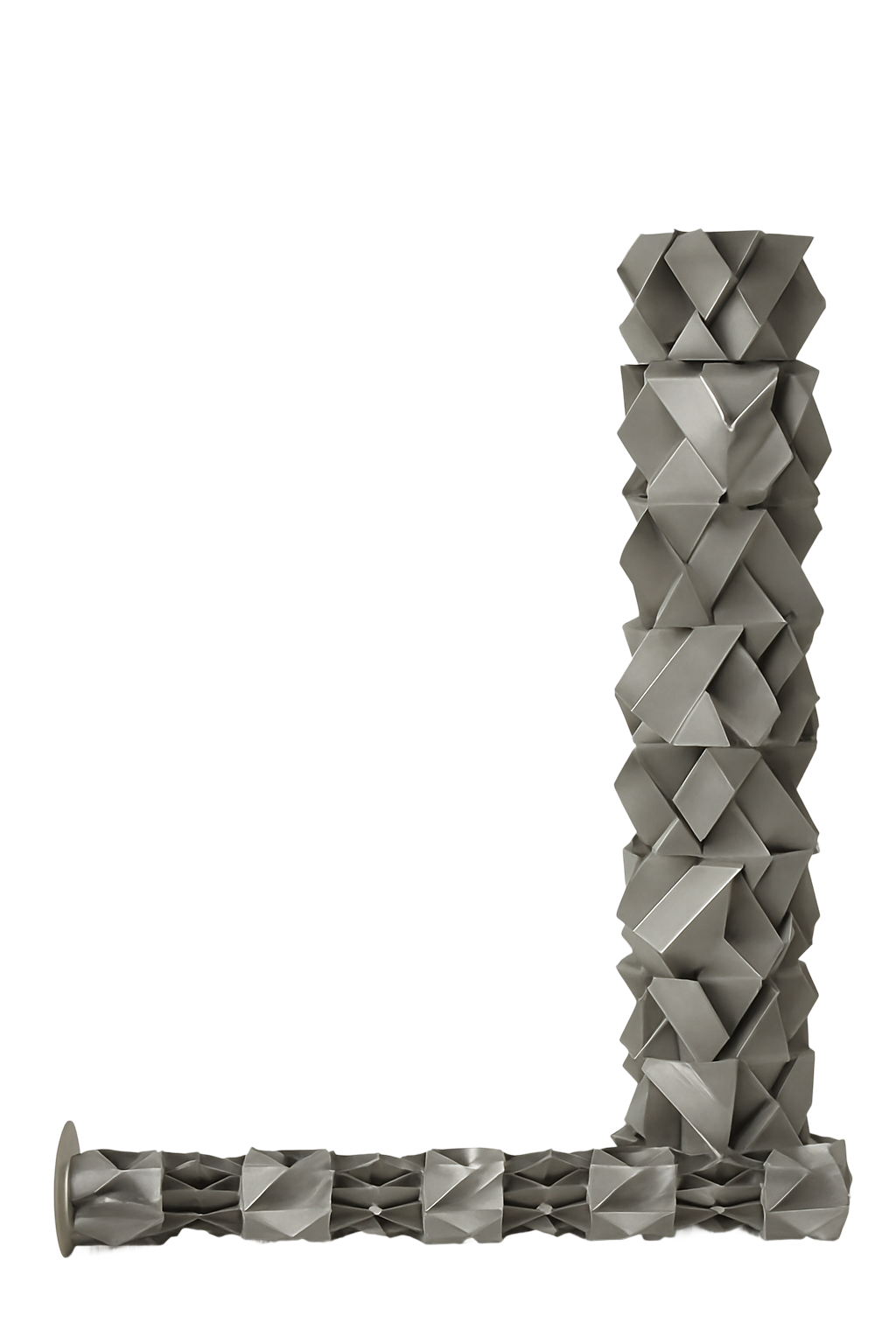 | Static Mixers S-Cube Static Mixers S-Cube Mass Transfer Pvt. Ltd. is a leading manufacturer and supplier of high-performance Static Mixers designed for efficient... View product → |
Frequently asked questions
How does a static mixer create mixing without a motor?
Fixed elements divide, rotate and recombine the flowing stream. The pump provides the pressure energy, so the mixer needs no motor, gearbox or rotating drive train.
How do you match a static mixer to the process duty?
Define the phases first, then select geometry for the required liquid-liquid blending, gas-liquid dispersion or solid-liquid suspension duty. Viscosity, flow ratio and fouling risk also affect the choice.
What flow information is needed for industrial static mixer selection?
Provide minimum, normal and maximum flow rates, fluid properties, operating temperature and pressure, pipe size, phase ratio and allowable pressure drop.
Are static mixers worth the pressure drop and fouling risk?
Compare the required mixing quality with pump capacity, pressure drop, cleaning access and turndown performance. A static mixer is worthwhile when its process gain outweighs those operating constraints.