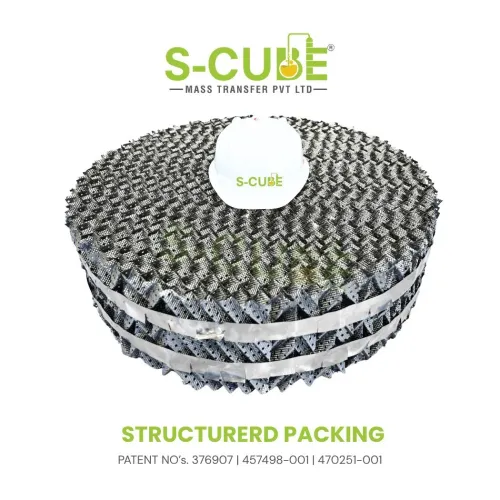

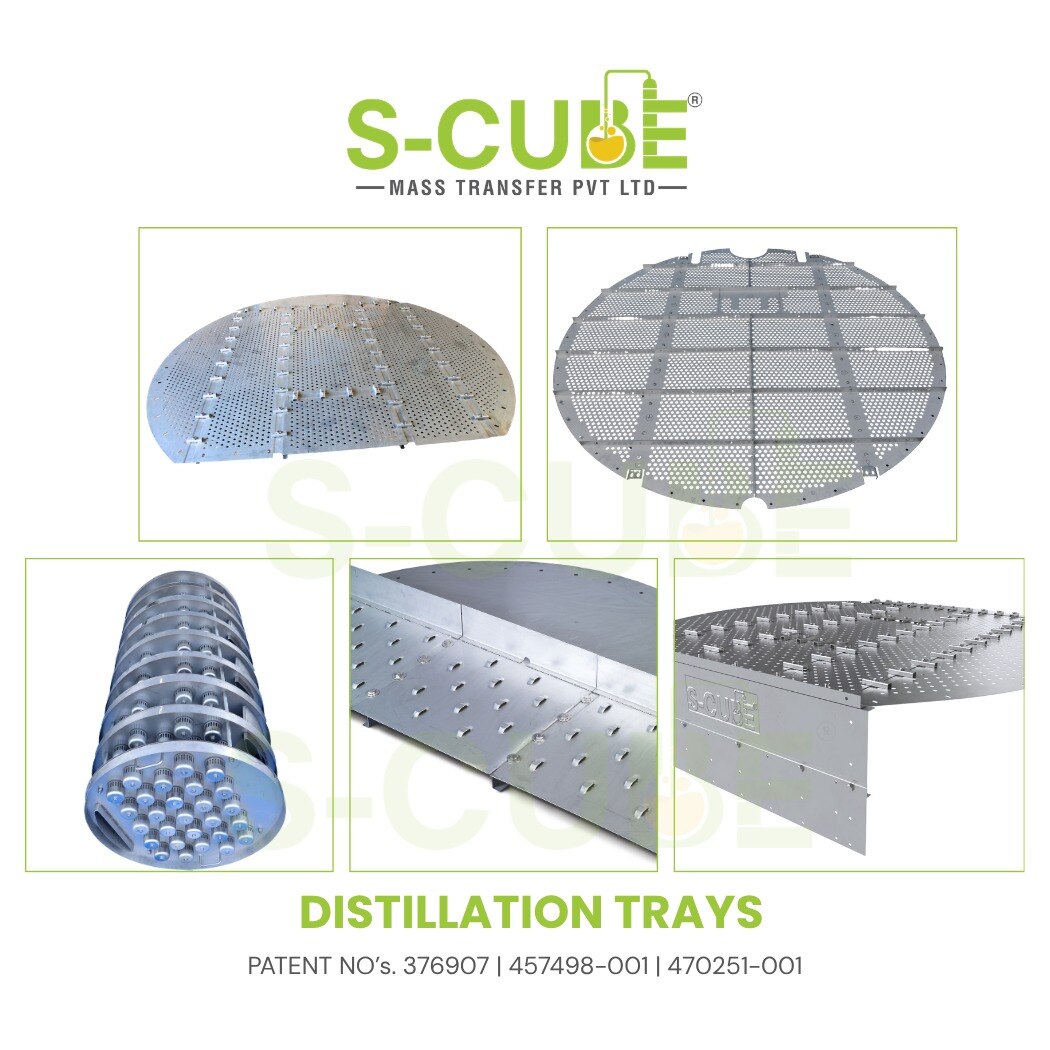
Distillation trays are worth the investment when their operating range, maintenance demands, and energy impact match the separation duty—not simply because a column needs internal stages. You will be able to compare tray and packing economics, identify the right tray design, and build a purchase specification around your feed, utilities, purity target, and production schedule.
Key takeaways
- Calculate recovery, purity, reflux, energy, and off-specification costs before choosing trays.
- Select sieve, valve, bubble-cap, or dual-flow trays from operating conditions.
- Choose packing when pressure drop, vacuum operation, or low liquid rates dominate.
- Require material, surface finish, testing, and documentation for pharmaceutical trays.
When the economics justify a tray column
A tray column justifies its cost when the extra product value, throughput, or reliability exceeds its installed and operating penalties over the plant’s expected life. Calculate the annual case using feed rate, recovery, product purity, reflux ratio, operating hours, energy prices, and the value of avoiding off-specification batches.
Include these costs, not only the purchase quote:
- Column diameter, tray count, metallurgy, corrosion allowance, spare internals, lifting access, and installation labour
- Reboiler steam, condenser cooling-water, and condensate costs at actual Hyderabad seasonal utility conditions
- Pressure-drop impact on achievable vacuum, condenser duty, and reboiler temperature
- Shutdown time for inspection and cleaning, plus replacement labour and lost production
Industrial distillation trays are strongest economically in large columns with steady vapor and liquid traffic, where staged contact, solids tolerance, and accessible maintenance outweigh their pressure drop. Compare the result with structured or random packing when throughput is low, campaigns vary sharply, or vacuum operation makes every kilopascal expensive.
Rate minimum, normal, and maximum loads before deciding: a sieve tray’s low price is false economy if turndown causes weeping, while a valve or bubble-cap design can cost more but preserve separation across a wider load range.
That is the practical test for distillation trays for chemical manufacturers in Hyderabad: compare whole-life cost against measurable separation and production gains.
The operating benefits—and the costs—you need to quantify
Trays earn their keep when a chemical plant has substantial vapor and liquid traffic, requires staged separation, and values rugged operation over minimum pressure drop. The distillation tray benefits for chemical plants include high throughput, measurable stage efficiency, controlled entrainment, and less dependence on liquid-distribution hardware than packed beds.
| Performance factor | Value created | Penalty to quantify |
|---|---|---|
| Large column diameter and high traffic | More separation capacity per operating hour | Larger shell, tray count, supports, and lifting equipment |
| Suspended solids or fouling | Easier inspection, washing, and mechanical cleaning than fine packing | Blocked perforations or downcomers can cause flooding and lost production |
| Required purity and reflux | Stable vapor-liquid contact can reduce off-spec product | Higher reflux increases reboiler and condenser duty |
| Pressure drop | Robust operation at atmospheric or elevated pressure | Each tray raises column pressure, steam use, and vacuum-system load |
| Variable feed rate | Proper hydraulic design preserves contact across the load range | Low vapor velocity causes weeping; high velocity causes entrainment |
Include cooling-water temperature by season, steam pressure, condensate conditions, cleaning hours, replacement labour, metallurgy, and expected operating hours in the calculation. A tray column’s purchase price can look attractive until pressure-drop losses, shutdown cleaning, and utility penalties erase the margin. Low-throughput campaigns and deep vacuum deserve particular scrutiny.
Choosing between sieve, valve, bubble-cap, and dual-flow trays
Choose from the complete operating envelope: minimum, normal, and maximum vapor and liquid rates, feed condition, viscosity, surface tension, foaming, solids, and required turndown. Column diameter alone is not enough for distillation tray selection in Hyderabad.
| Option | Vapor and liquid loads | Turndown, fouling, and pressure drop |
|---|---|---|
| Sieve tray | Suits steady, moderate-to-high traffic | Narrower turndown; no moving parts; low pressure drop, but holes can weep or plug |
| Valve tray | Handles a wider vapor-load range and changing liquid rates | Better turndown; valves add wear and fouling points; moderate pressure drop |
| Bubble-cap tray | Works at very low vapor rates and low liquid traffic | Excellent weeping resistance; highest capital cost and pressure drop |
| Dual-flow tray | Provides high capacity with large open area | Poor low-load performance; no downcomers, low pressure drop, and fewer small openings to block |
Select sieve trays when loads are stable and maintenance simplicity matters. Choose valves when production varies across campaigns. Bubble caps fit low-rate operation where weeping would destroy separation. Dual-flow trays suit high-capacity service with clean or manageable feeds, not wide turndown.
For industrial distillation trays, check steam pressure, condensate conditions, cooling-water temperature, and seasonal variation before fixing pressure drop: Hyderabad utility data can change the best design.
When packing is the better answer than trays
Vacuum and heat-sensitive service usually favour structured packing: its low pressure drop and low liquid holdup reduce boiling temperature and degradation. Foaming also often favours packing, but confirm liquid distribution because foam can flood a packed bed.
| Option | Best fit | Main limitation |
|---|---|---|
| Industrial distillation trays | Large columns with high vapour and liquid traffic, suspended solids, fouling, or intermittent liquid flow | Higher pressure drop; perforations and downcomers can plug |
| Structured packing | Deep vacuum, heat-sensitive products, low-pressure-drop operation, and high efficiency per metre | Poor distribution, solids, or fouling can ruin performance; distributors require careful design |
| Random packing | Corrosive, foaming, low-to-medium throughput, or service needing simpler replacement | Lower efficiency and greater liquid holdup than structured packing; packing can settle or break |
The distillation tray benefits for chemical plants are strongest when throughput is substantial and maintainability matters more than minimum pressure drop. Choose trays for solids-bearing service after checking that openings and downcomers will not bridge; use open random packing when a packed column is necessary but fouling risk makes fine structured packing unsafe.
For corrosive duty, specify chloride level, pH, temperature, oxidizers, acid chemistry, crevice exposure, alloy, weld procedure, and passivation separately from vessel material. Rate every option at minimum, normal, and maximum loads, then test it against Hyderabad’s seasonal cooling-water temperature, steam pressure, required turndown, and cleaning method.
What pharmaceutical manufacturers must verify before ordering trays
A tray order is suitable only when the pharmaceutical batch process can be cleaned, drained, inspected, and changed over without hidden product residue. For distillation trays for pharmaceutical manufacturers, hygienic design matters as much as vapour capacity.
1. Define each batch size, campaign duration, feed composition, minimum and maximum vapour and liquid rates, and required turndown. A tray that works at normal load can weep or flood during a small campaign.
2. Specify the validated cleaning method, including cleaning-in-place temperature, flow, chemical concentration, rinse volume, and inspection standard. 21 CFR 211.67 requires written cleaning and maintenance procedures.
3. Require complete drainability. Downcomers, tray decks, supports, sumps, and nozzles must empty by gravity; trapped liquid creates carryover and cross-contamination risk.
4. Select material from chloride level, pH, temperature, oxidising conditions, acid composition, and crevice exposure—not vessel material alone. 316L is not universal for hot chloride or aggressive halide service.
5. Require continuous, smooth welds with no pits, cracks, exposed crevices, or rough internal attachments. Specify weld inspection, surface finish, pickling, passivation, and records.
6. Quantify liquid holdup and residence time. Excess holdup increases product loss and delays drying during changeover.
7. Confirm access for inspection and removal, plus the lifting method and time allowed between batches. Inaccessible trays can make a theoretically cleanable column impossible to validate.
Build a Hyderabad-specific specification before comparing suppliers
A sound distillation tray selection in Hyderabad starts with utility data, not column diameter. Give each supplier minimum, normal, and maximum feed rate; operating pressure; feed quality; vapor and liquid loads; density; viscosity; surface tension; foaming tendency; solids content; corrosion allowance; and required turndown.
Require these deliverables before comparing quotations:
- Cooling-water inlet temperature by season, steam pressure, condensate pressure, and available electrical load. These determine condenser pressure, reboiler duty, and whether packing or heat-integrated alternatives beat trays.
- Hydraulic guarantees stating capacity, predicted flood percentage, weeping limit, entrainment, pressure drop per tray, stage efficiency, turndown, and liquid residence time. Ask for the calculation method, geometry, physical-property basis, and flood correlation; “80% flooding” is not universal acceptance criteria.
- Drawings, material certificates, weld procedures, inspection reports, spare-parts lists, installation tolerances, cleaning access, and a signed performance test basis.
Compare lifecycle cost, not just purchase price:
| Cost item | Require from supplier | Why it matters |
|---|---|---|
| Energy | Reboiler and condenser duty at each load | Utilities can dominate ownership cost |
| Maintenance | Tray removal time, spares, cleaning interval | Fouling can erase capacity savings |
| Risk | Drainability, access, replacement scope | Polymer or salt deposits increase shutdown cost |
For distillation trays for chemical manufacturers in Hyderabad, S-Cube Mass Transfer Pvt Ltd can be one bidder when its proposal answers these site-specific questions rather than repeating catalogue claims.
Related products
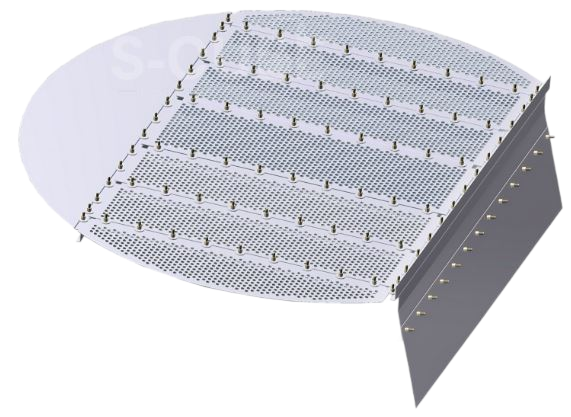 | Distillation Trays S-Cube Distillation Trays Manufacturer S-Cube Mass Transfer Pvt. Ltd. View product → |
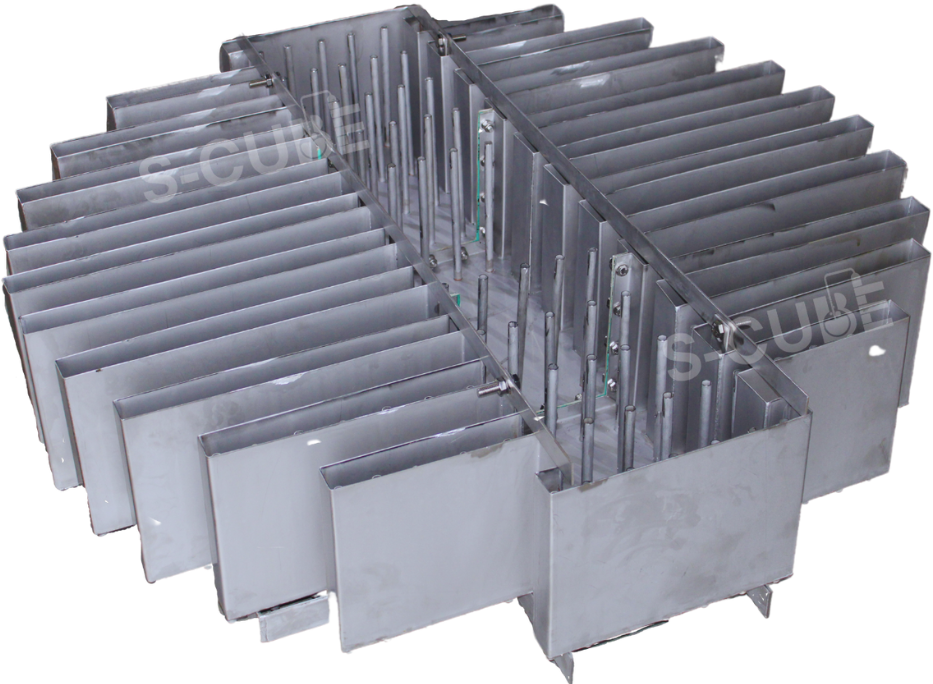 | Column Internals S-Cube Column Internals S-Cube Mass Transfer Pvt. Ltd. is a leading manufacturer and supplier of high-quality Column Internals designed to maximize... View product → |
Frequently asked questions
When do distillation trays make economic sense for a chemical plant?
Trays make economic sense when added product value, throughput, recovery, or batch reliability exceeds installed cost, maintenance, pressure-drop, and energy penalties over the column’s expected life. Calculate the annual case using feed rate, product purity, reflux ratio, operating hours, energy prices, and the cost of off-specification batches.
How do sieve, valve, bubble-cap, and dual-flow trays differ?
Sieve trays use perforated plates and suit stable vapor-liquid flow at lower cost. Valve trays handle changing vapor rates with movable valves. Bubble-cap trays maintain liquid seals at low vapor rates but cost more and create higher pressure drop. Dual-flow trays eliminate downcomers and suit high-capacity service, but they need careful control of liquid and vapor loading.
When is packing better than trays in a distillation column?
Packing is often the better choice when you need low pressure drop, vacuum operation, high surface area, or a compact column. Trays become more attractive when you need easier inspection, wider liquid-handling capacity, accessible stage-by-stage troubleshooting, or robust operation at higher liquid loads.
What must pharmaceutical manufacturers verify before ordering distillation trays?
Verify the alloy or polymer grade, surface finish, weld quality, cleanability, drainability, dimensional drawings, tolerances, material certificates, inspection records, and documentation required for your quality system. Confirm that the design prevents product hold-up and supports cleaning and inspection without damaging the tray.
What should a Hyderabad-specific tray specification include?
State feed composition, flow ranges, pressure and temperature, vapor and liquid rates, tray spacing, column diameter, allowable pressure drop, materials, corrosion allowances, surface finish, design code, inspection requirements, delivery conditions, and site constraints. Include Hyderabad’s utility conditions, monsoon logistics, installation access, and the plant’s available fabrication and maintenance capabilities.