
A mist eliminator controls entrained liquid droplets after gas-liquid contact, but it does not perform the vapor-liquid mass transfer carried out by trays or packing. By comparing droplet size, loading, fouling risk, pressure drop, and drainage requirements, you can choose between a demister, vane pack, cyclone, coalescer, settling zone, or a combined separator package.
Key takeaways
- Use mesh pads for fine droplets at moderate gas velocity.
- Choose vane packs when fouling, pressure drop, or liquid load rules out mesh.
- Use cyclones or settling zones for bulk separation before final demisting.
- Check gas rate, liquid load, droplet size, pressure drop, and fouling risk.
What a Mist Eliminator Does—and Where It Fits in the Process
A mist eliminator removes liquid carryover by forcing gas through a separation element that intercepts entrained droplets. In a wire-mesh pad, droplets strike and join the wires; in a vane pack, turning passages drive droplets onto blades. The liquid drains away while gas exits with less entrainment.
- Gas leaving an absorber, scrubber, separator, or distillation column enters the demisting zone.
- Inertia, impaction, and changes in flow direction move droplets onto mesh, vanes, or another collection surface.
- Coalesced liquid forms larger drops, drains against the gas flow, and returns to the vessel or column sump.
A demister does not create the vapor-liquid contact needed for mass transfer. Trays, random packing, and structured packing provide that contact; the mist eliminator usually sits above the final contact zone to stop liquid leaving with clean gas.
A vessel may also need an upstream cyclone or settling section to remove slugs and bulk liquid before the final-stage element.
Choose the arrangement in this order:
- Establish droplet-size distribution, liquid loading, gas velocity, allowable carryover, fouling risk, pressure drop, temperature, pressure, and fluid properties.
- Match the element to the service: wider-passage vanes suit solids or high liquid loading, while mesh or fiber-bed devices address finer droplets.
- Use Souders–Brown only for preliminary sizing. Its K value changes with geometry, pressure, surface tension, foaming, loading, and carryover limit; a tray K value cannot validate a mesh pad or vane pack.
Mist Eliminator Comparison: Mesh, Vanes, Cyclones, Coalescers, and Settling Zones
A useful mist eliminator comparison starts with the droplet-size distribution, not a single removal-efficiency figure. Match the equipment to liquid loading, solids, viscosity, surface tension, gas velocity, and the allowable outlet carryover.
| Option | Droplet and aerosol fit | Loading and solids behaviour | Main trade-off |
|---|---|---|---|
| Wire mesh | About 3–5 micrometres and larger; strong capture at low pressure drop | Best for clean, non-polymerising liquids and modest loading | Fouls, plugs, floods, or deforms with solids, crystals, foam, or viscous liquid |
| Vanes or chevrons | Larger droplets than fine mesh | Wider passages tolerate dirt, solids, viscous liquids, and higher liquid loading | Less effective for fine droplets and aerosols |
| Cyclones | Coarse entrainment and larger droplets | Robust with solids and high liquid rates; pressure drop rises with separation duty | Poor choice for fine mist and submicrometre aerosol |
| Settling zone | Largest droplets at low gas velocity | Simple, low-maintenance, and tolerant of contamination | Requires vessel volume and cannot control fine carryover |
| Fiber-bed or candle coalescer | Fine droplets, submicrometre aerosol, and condensation-generated mist | Needs controlled loading and protection from plugging | Higher pressure drop, fouling sensitivity, and maintenance burden |
For aerosol limits or product-purity specifications, a mesh pad or vane pack can show attractive nominal efficiency yet fail the actual outlet concentration. Consider a fiber-bed, candle coalescer, or wet electrostatic precipitator.
Use Souders–Brown only for preliminary sizing. Its K value changes with separator type, pressure, foaming, liquid properties, and carryover limits; copying a tray value into other mist elimination equipment options can produce an invalid design.
Choosing Between Trays, Packing, and Final-Stage Demisters
Choose trays or packing for vapor-liquid mass transfer; choose a final-stage demister for removing entrained liquid from gas. A demister does not replace structured packing, random packing, or trays because it separates droplets after contact rather than creating contact area for absorption, stripping, or distillation.
| Option | Primary job | Choose it when | Main limitation |
|---|---|---|---|
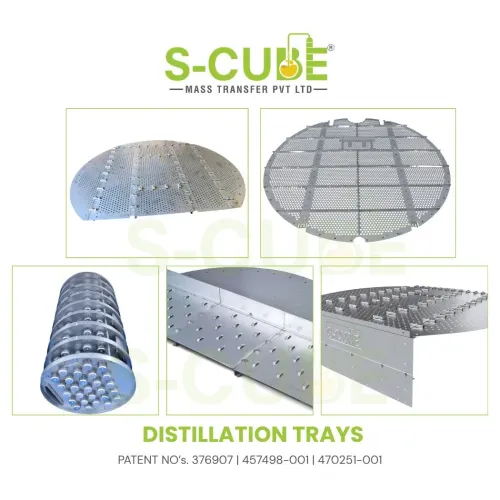
| Trays | Stagewise vapor-liquid contact | You need defined stages, liquid holdup, or handling of high liquid rates | Weeping, entrainment, and flooding limit capacity |
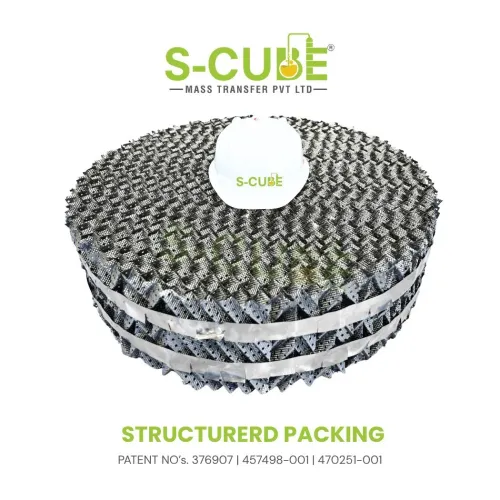
| Random or structured packing | Continuous contact area | You need low pressure drop or high transfer efficiency | Maldistribution, fouling, and poor liquid distribution reduce performance |
| Final-stage demister | Droplet capture before gas exits | The outlet has a carryover limit after a scrubber, absorber, or column | It cannot remove dissolved material or perform mass transfer |
One separator needs more than one internal when the process creates both bulk liquid and fine carryover. A cyclone or inlet device can remove slugs and large droplets first; trays or packing can then provide mass transfer; a demister above the final contact zone can capture the remaining entrainment.
This arrangement protects the fine separator from liquid overload.
Compare demisters by droplet-size distribution, not a single removal percentage. A vane pack suits dirtier service and higher liquid loading, while mesh captures smaller droplets when drainage and fouling are controlled. Check gas velocity, pressure drop, drainage paths, support spacing, and re-entrainment risk; a flooded pad fails even with good intrinsic capture efficiency.
Failure Modes That Change the Correct Internal
A design that works at normal flow can fail during a liquid slug, compressor surge, foaming episode, or relief event. Check the upset case before approving the internal; a Souders–Brown velocity based only on normal flow can hide flooding and re-entrainment.
- Flooding occurs when gas velocity or liquid loading exceeds the device’s drainage capacity. Re-entrainment then carries captured liquid back into the gas, so reduce velocity or choose a higher-capacity vane, cyclone, or separator stage.
- Plugging from solids, crystals, polymer, or viscous liquid can turn a low-pressure-drop mesh pad into a restriction. Wider-passage vanes may survive this service better.
- Foaming creates a swollen liquid layer and unstable interface. It can invalidate a copied K value and require greater disengagement space, foam control, or a different separator.
- Maldistribution sends gas through one section too quickly while starving another. Check inlet devices, flow straighteners, support geometry, and liquid distribution—not just total flow.
- Corrosion can thin wires, vanes, grids, clips, and vessel attachments. Specify metallurgy and corrosion allowance for the actual temperature, contaminants, and wet-dry cycles.
- Vibration or pressure pulsation can fatigue welds and loosen retainers. Design for operating vibration, liquid slugs, and relief loads.
- Installation damage—crushed mesh, bent vanes, missing clips, or an incorrectly seated section—creates bypass and early failure. Require inspection before closure.
A useful mist eliminator comparison therefore includes support grids, hold-downs, removable access, differential-pressure monitoring, and drainage. A correctly sized pad still fails if liquid cannot drain or an upset load lifts it.
How to Check a Separation-Internal Fit from the Process Datasheet
Submit a datasheet that states the gas and liquid flow ranges, operating and design pressure, temperature, densities, viscosity, surface tension, solids content, foaming tendency, expected droplet-size distribution, allowable pressure drop, and maximum outlet carryover. Without these values, a quoted removal efficiency cannot establish a fit.
1. Identify the service location and duty. State whether the device sits after an absorber, scrubber, separator, or distillation column, and whether it must handle slugs, intermittent operation, vacuum service, or a defined turndown range.
2. Ask the supplier to identify the element type: wire mesh, vane pack, chevron, cyclone, settling section, or fiber-bed coalescer. The name S-Cube mist eliminator does not prove equivalence to any of these.
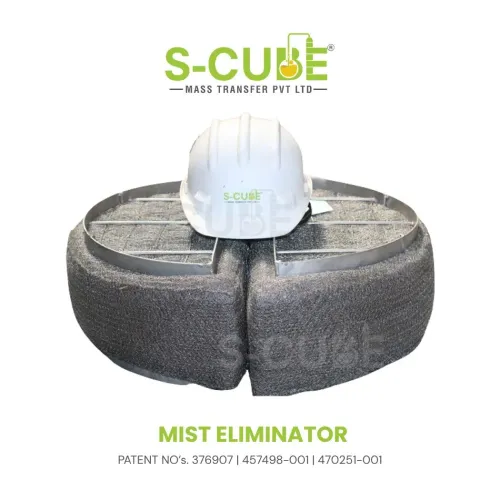
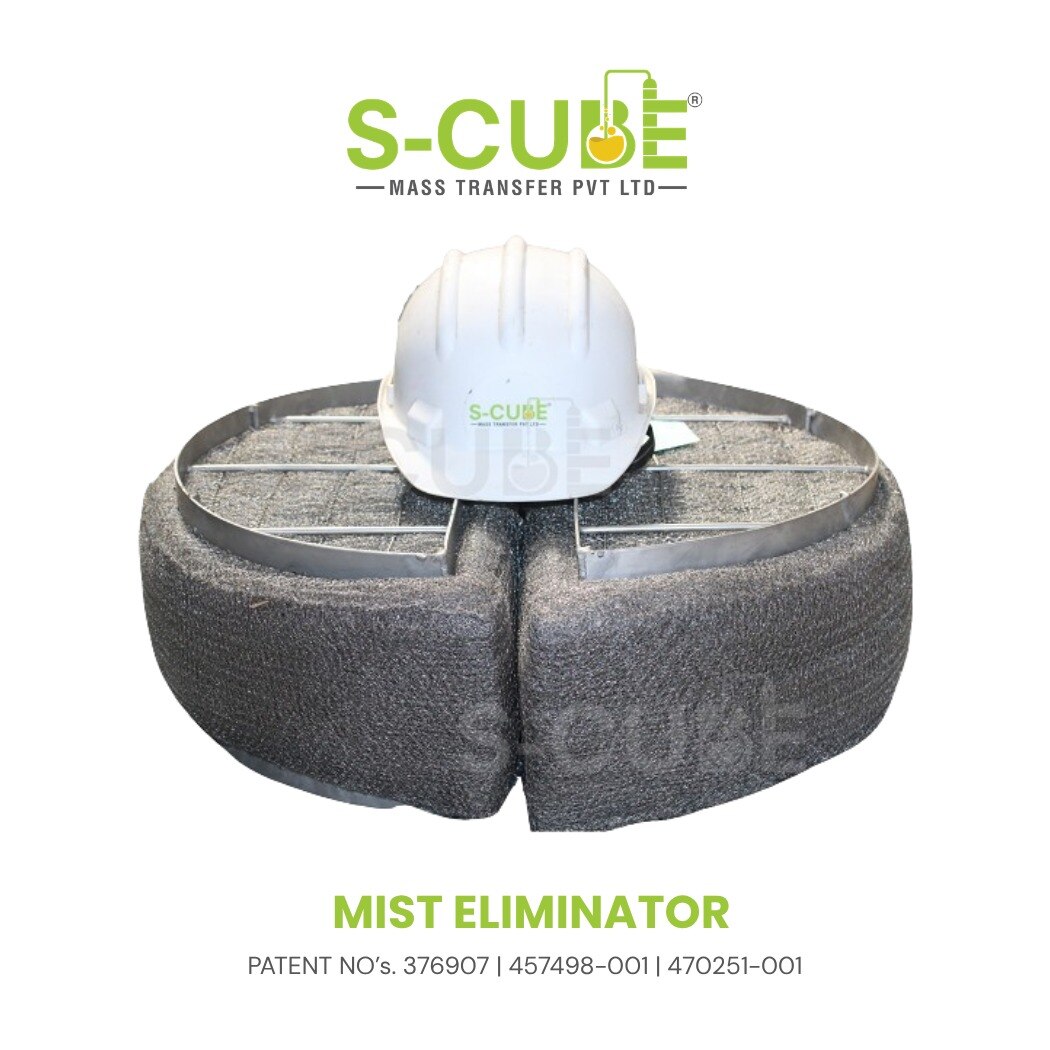
For an S-Cube mist eliminator, S-Cube Mass Transfer Pvt Ltd should state the design droplet-size basis, allowable gas and liquid loading, pressure drop, expected outlet carryover, turndown, materials, fouling limits, and test or field basis.
3. Check the sizing method, not only the result. A Souders–Brown K value copied from a tray design is not valid evidence for a mesh pad or vane pack; require the separator-specific K basis and the gas velocity used.
4. Compare the claim with your actual duty. Request removal performance across a droplet-size distribution, not one percentage, and confirm whether the mist elimination equipment options meet the submicrometre, fine-droplet, or bulk-liquid requirement without exceeding pressure-drop or plugging limits.
Related products
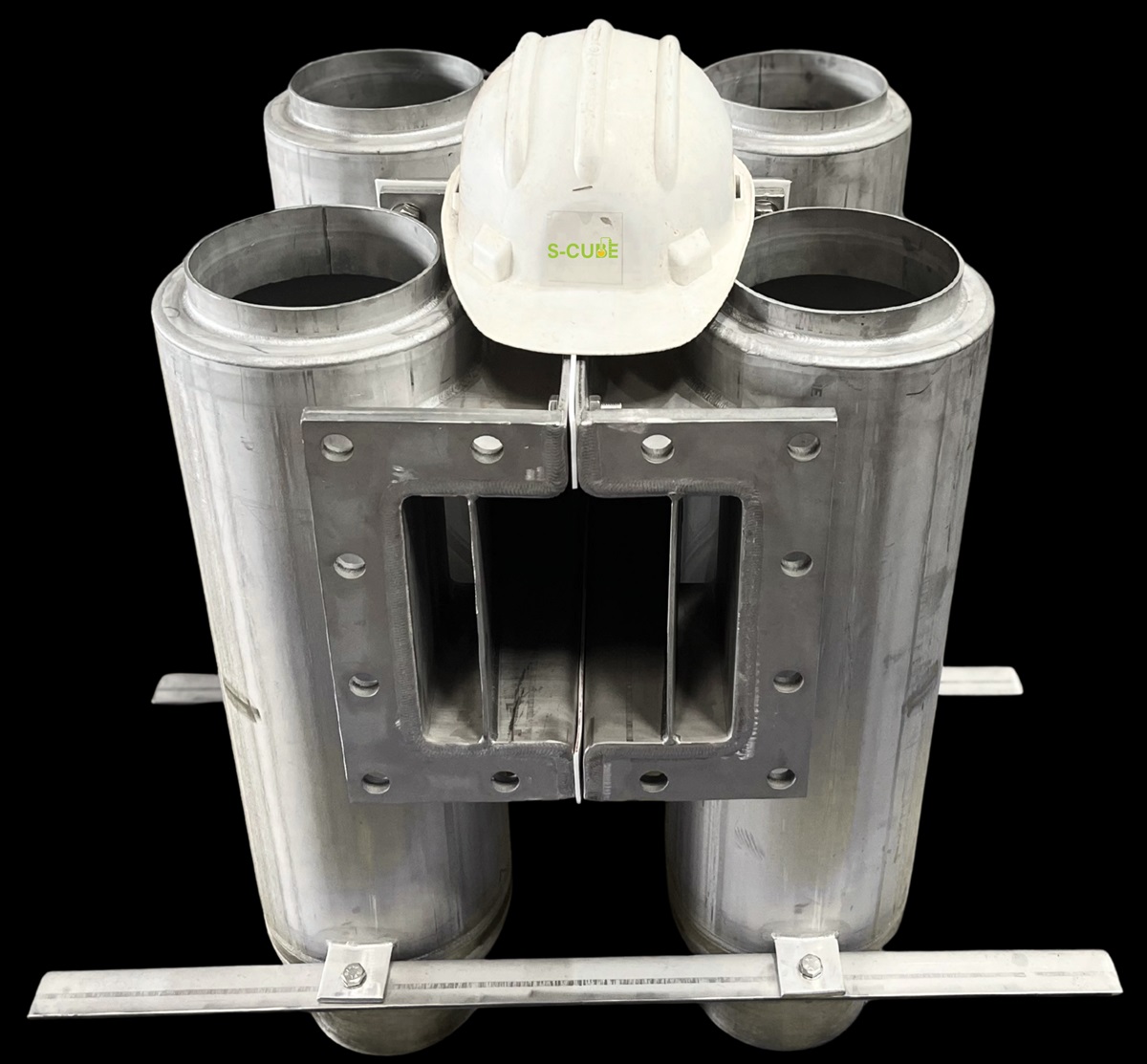 | Oil and Gas Internals Oil & Gas Internals S-Cube Mass Transfer Pvt. Ltd. is a leading manufacturer and supplier of high-quality Oil & Gas Internals, engineered to deliver... View product → |
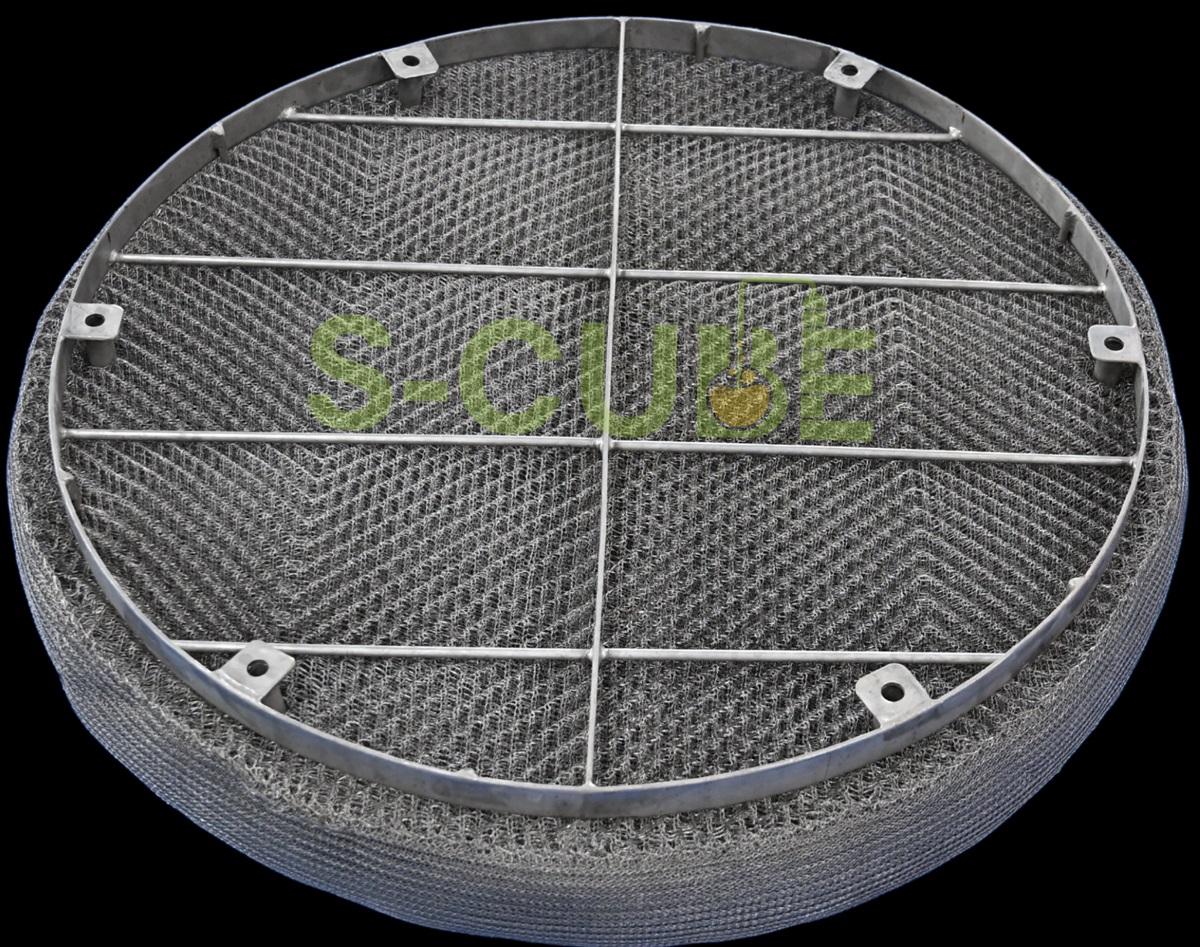 | S-Cube Mist Eliminator Manufacturer S-Cube Mass Transfer Pvt. Ltd. is a leading manufacturer and supplier of high-performance S-Cube Mist Eliminators, engineered for... View product → |
Frequently asked questions
What does a mist eliminator do in a process column?
It removes entrained liquid droplets from a gas stream by intercepting, coalescing, and draining them before gas exits the column.
How do mesh pads, vane packs, cyclones, coalescers, and settling zones compare?
Mesh pads capture fine droplets at low pressure drop, vane packs tolerate higher liquid loads and fouling, cyclones handle bulk separation, coalescers target difficult fine droplets, and settling zones need more vessel volume.
When should you use trays, packing, or a final-stage demister?
Use trays or packing for vapor-liquid mass transfer, then add a final-stage demister when the outlet gas must meet a carryover limit.
What process data determines the correct separation internal?
Review gas and liquid flow rates, operating pressure and temperature, density and viscosity, droplet-size distribution, allowable pressure drop, fouling risk, and required outlet carryover.
Related products
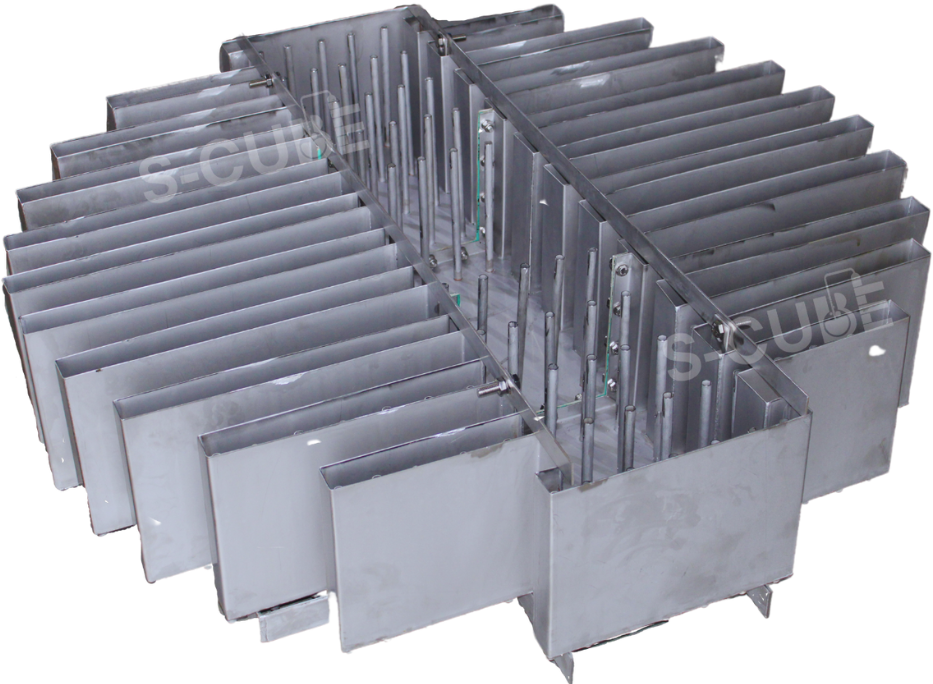 | Column Internals S-Cube Column Internals S-Cube Mass Transfer Pvt. Ltd. is a leading manufacturer and supplier of high-quality Column Internals designed to maximize... View product → |
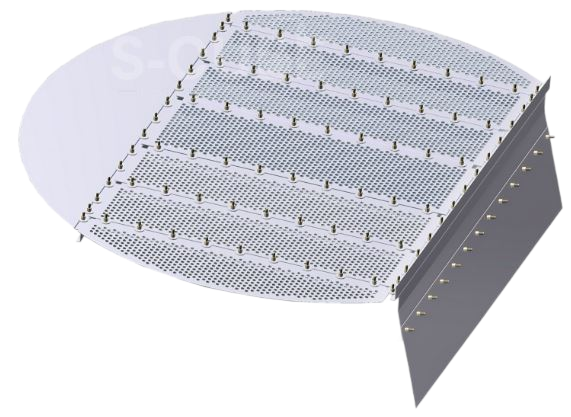 | Distillation Trays S-Cube Distillation Trays Manufacturer S-Cube Mass Transfer Pvt. Ltd. View product → |
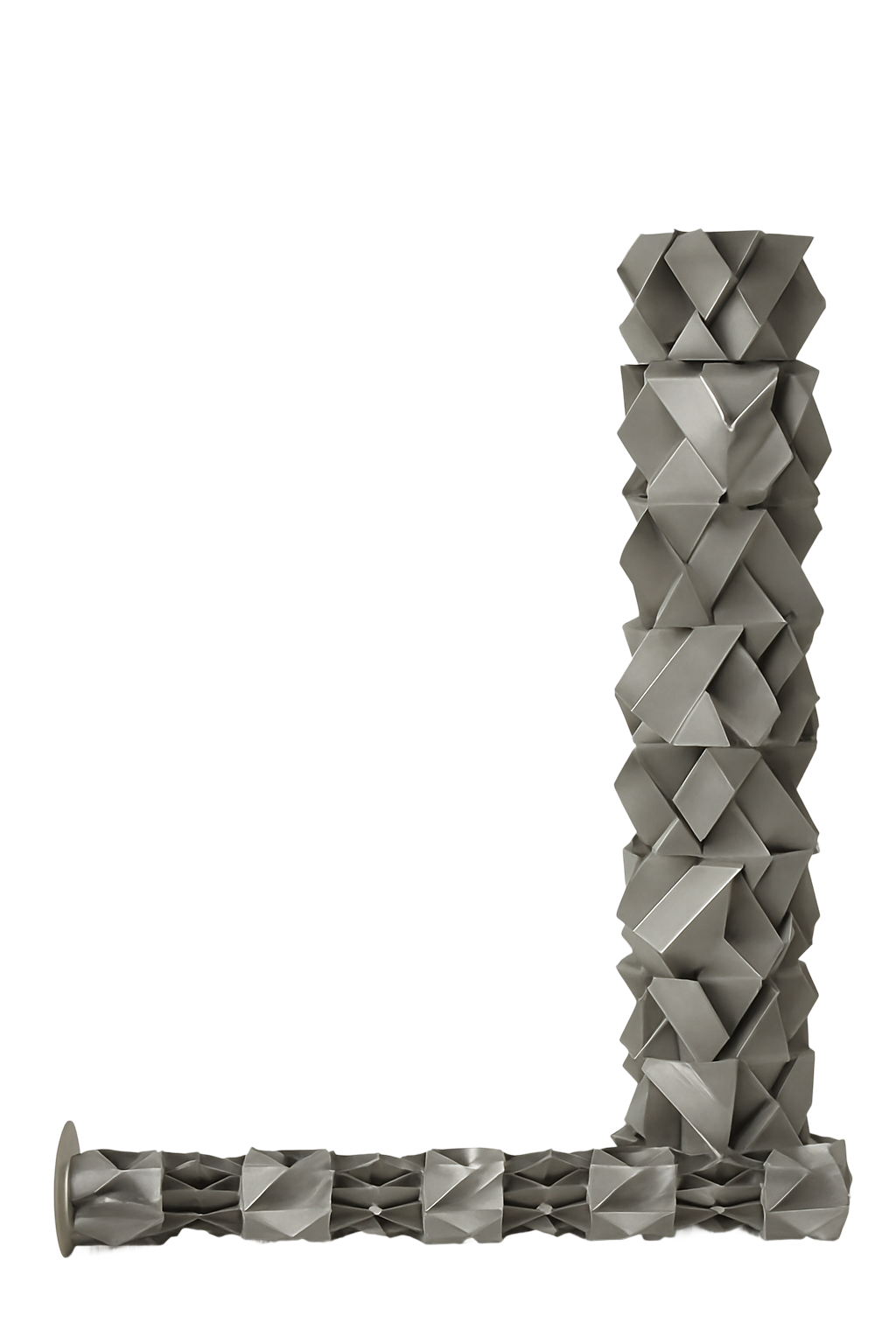 | Static Mixers S-Cube Static Mixers S-Cube Mass Transfer Pvt. Ltd. is a leading manufacturer and supplier of high-performance Static Mixers designed for efficient... View product → |
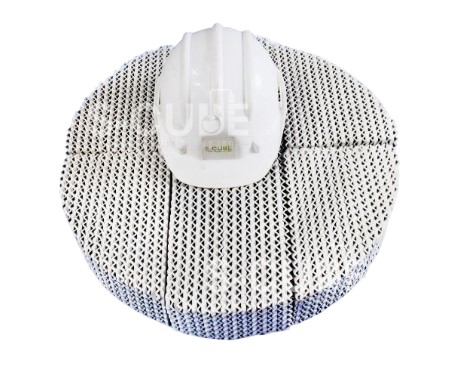 | SCM Structured Packing SCM Structured Packing is a high-performance mass transfer packing designed to provide superior efficiency in distillation, absorption, stripping,... View product → |