
Choosing column packing requires more than comparing advertised efficiency. You need to match packing geometry and material with pressure drop, vapor and liquid loads, separation targets, fouling risk, and the quality of liquid distribution. By the end, you will have a practical basis for comparing SCM structured packing with random packing, trays, and open-structure alternatives.
Key takeaways
- SCM is a supplier-family label, not a universal packing specification.
- Compare specific area, corrugation, material, pressure drop, capacity, and efficiency.
- Use structured packing for low-pressure-drop duties, including many vacuum columns.
- Specify liquid distributors, redistributors, fouling limits, and test conditions before comparing quotes.
What SCM Structured Packing Is—and How It Differs from Trays and Random Packing
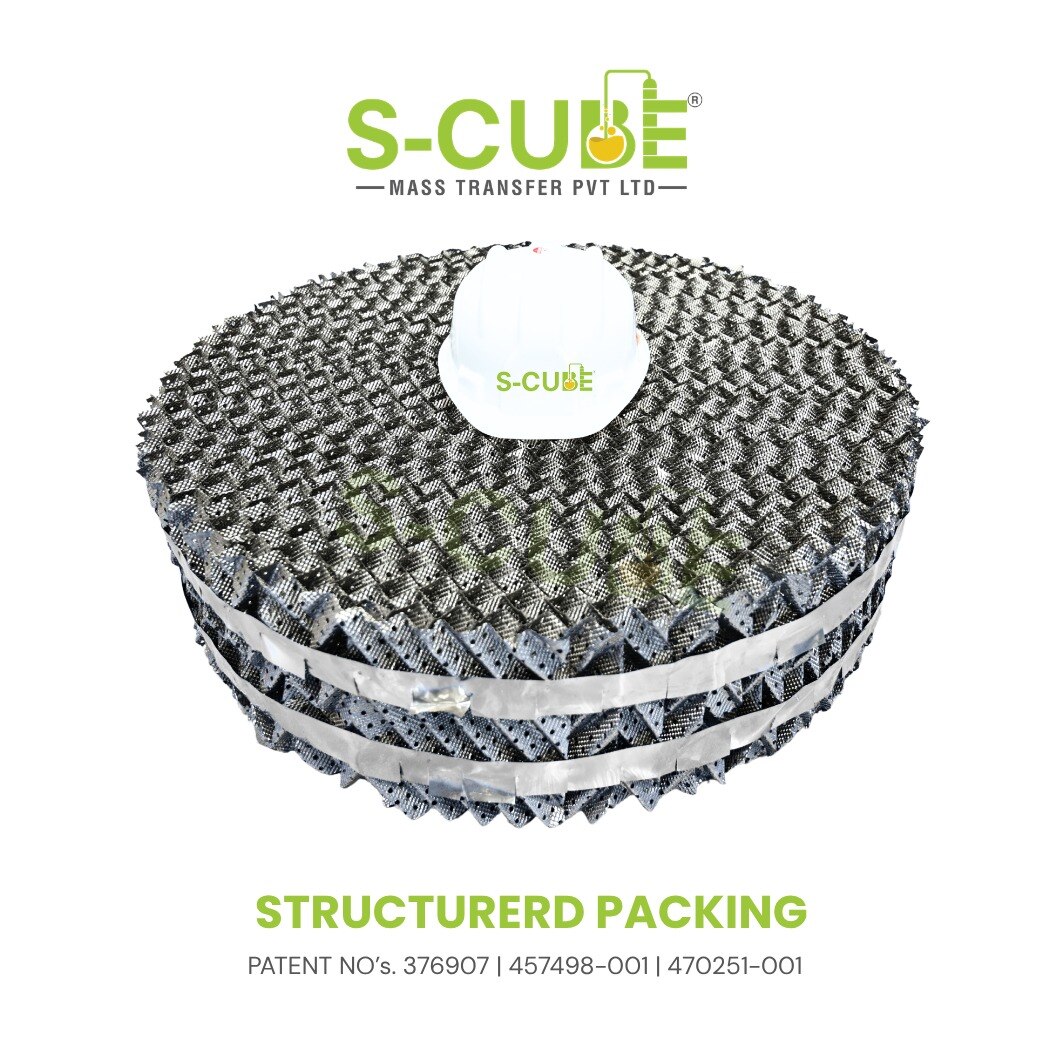
The question “what is scm structured packing” has no single universal standards-based answer. SCM is a supplier-family label for structured packing made from corrugated metal sheets or wire mesh; the abbreviation does not define specific surface area, sheet height, corrugation angle, material, block size, or capacity.
Adjacent sheets are installed with opposing corrugation angles. Together they create continuous, intersecting channels: liquid wets the surfaces and flows downward while vapor rises, producing repeated countercurrent contact across a fixed geometry. Performance depends on the selected area, geometry, material, block dimensions, and liquid distributor—not on “SCM” alone.
Random packing uses loose Pall rings, Raschig rings, or similar pieces dumped into the column. Their orientation and local voids vary, so replacement is simple, but channeling and uneven wetting can reduce performance.
Trays use discrete decks instead: sieve trays pass vapor through holes, valve trays use liftable valves, and bubble-cap trays force vapor through liquid-filled caps.
| Option | Physical arrangement | Main trade-off |
|---|---|---|
| SCM structured packing | Fixed corrugated sheets or mesh | Low pressure drop and strong efficiency per unit height; sensitive to maldistribution and fouling |
| Random packing | Loose individual pieces | Easier partial replacement and dirty-service tolerance; less uniform contact |
| Tray decks | Repeated sieve, valve, or bubble-cap stages | Easier visual inspection and better tolerance of some hydraulic disturbances; higher pressure drop |
Wire-mesh packing targets very low-pressure-drop vacuum service but needs careful wetting and handling.
Structured Packing Comparison: Pressure Drop, Capacity, Efficiency, and Cost
Choose the option against the same duty basis: pressure drop, capacity, separation, turndown, fouling tolerance, inspection access, and installed cost. A structured packing comparison is credible only when “SCM structured packing for comparison” names grade, geometry, pressure, fluids, rates, and distributor.
HETP, flooding velocity, and liquid load are design-dependent, not material constants; require pressure, fluid properties, packing grade, and distributor conditions for every quoted value.
| Option | Pressure drop | HETP / stages | Flooding velocity | Liquid load | Allowable operating range | Holdup | Turndown | Installed cost |
|---|---|---|---|---|---|---|---|---|
| SCM structured packing | Low, mbar/m packed height | HETP in m; high stages/m, duty-dependent | m/s, vendor-rated | m³/m²·h, distributor-limited | Vapor and liquid, % of design load; vendor guarantee | m³/m³, low | Ratio, distributor-dependent | High |
| Random packing | Low-to-medium, mbar/m | HETP in m; stages/m, duty-dependent | m/s, grade-dependent | m³/m²·h | Vapor and liquid, % of design load | m³/m³, medium | Ratio, moderate | Low-to-medium |
| Sieve trays | mbar/tray | Theoretical stages/tray | m/s through tray area | m³/m²·h across tray | Vapor and liquid, % of design load | m³/m³, medium | Ratio, lower | Medium |
| Valve trays | mbar/tray | Theoretical stages/tray | m/s through tray area | m³/m²·h | Vapor and liquid, % of design load | m³/m³, medium | Ratio, broader | Medium-to-high |
| Bubble-cap trays | High, mbar/tray | Theoretical stages/tray | m/s through risers | m³/m²·h | Vapor and liquid, % of design load | m³/m³, high | Ratio, strongest at low load | High |
Structured packing favours low pressure drop and high separation per height. Random packing lowers purchase cost and simplifies partial replacement, while trays provide inspection access and familiar operation. Bubble caps sustain vapor-liquid contact at low loads but add cost and pressure drop; valve trays improve turndown over sieve trays, which remain simpler and more fouling-tolerant.
Treat every table entry as a screening comparison, not a design guarantee.
Where SCM Packing Fits: Vacuum Distillation and Specific Process Duties
SCM packing for distillation columns provides a practical advantage when pressure drop, separation efficiency per metre, or limited column height controls the design. Wire-gauze grades suit very low-pressure-drop vacuum service and low liquid loads; corrugated-sheet grades offer greater mechanical strength and broader duty flexibility.
In vacuum distillation, every additional mbar consumes reboiler-to-condenser pressure margin, raises boiling temperature at the same composition, and can increase thermal damage to heat-sensitive products. Check ejector or liquid-ring-pump capacity, condenser pressure, air leakage, allowable column pressure profile, and reboiler temperature before selecting packing.
| Option | Best fit | Why another option may win |
|---|---|---|
| Wire-gauze | High-efficiency vacuum duty | Fouling, poor wetting, or mechanical handling favours corrugated sheet |
| Corrugated-sheet | Clean distillation, absorption, or stripping | Higher cost and distribution sensitivity require justification |
| Random packing | Fouling tolerance and partial replacement | Higher pressure drop and lower efficiency per height |
| Open-grid packing | Solids, scale, polymers, or viscous liquids | Lower efficiency may require extra height |
SCM structured packing applications include refinery fractionation to separate hydrocarbon cuts; solvent recovery to remove solvent from higher-boiling residue; gas sweetening to absorb H₂S and CO₂ into amine; CO₂ absorption from flue or process gas; amine regeneration to strip acid gases; air separation of cryogenic gas mixtures; dehydration with glycol or molecular-sieve-related solvent systems; chemical absorption of reactive contaminants into liquid; and stripping volatile compounds from wastewater, solvents, or product streams.
Compare internals against the actual loads: fine gauze or sheet for efficiency, random packing for robustness, and open-grid designs for unobstructed flow.
Hydraulic Design: Liquid Distribution, Redistributors, and Fouling Limits
Liquid distribution and redistributor geometry determine whether selected packing performs in the real column. A packing block cannot recover efficiency lost through poor wetting, channeling, or vapor bypass.
- Record feed composition, target purity, operating pressure, vapor and liquid rates, temperature, viscosity, surface tension, foaming tendency, solids content, corrosivity, column diameter, packed height, and allowable pressure drop.
- Select a trough distributor with level-controlled outlets, or a pan or orifice distributor with a defined outlet pattern. Check outlet density, pan leveling, vapor bypass, inspection access, and removal without dismantling the column.
- Favor open-grid or robust random packing when the service contains suspended solids, polymer formation, scale, high viscosity, frequent mechanical cleaning, or liquid rates too low to wet fine corrugations consistently.
Redistributors belong between beds and after long packed sections because liquid migrates toward the wall and forms channels as it travels downward. Require the design to state spacing in metres; a generic height rule does not prove that liquid will be re-spread before the next section.
Poor distribution leaves dry packing and reduces effective area. Wet channels can flood prematurely, while dry zones produce local corrosion and higher HETP than the quoted design value. Fine wire-gauze packing is especially dependent on uniform wetting and is less forgiving of damage or fouling.
Check the assembled internals, not only the packing data sheet: support, hold-down, distributor level, outlet pattern, bed access, and cleanout route. A difficult-to-remove distributor can turn a minor fouling problem into a major outage.
How to Make the Final Choice and Write a Comparable SCM Packing Specification
Approve SCM packing only after a material and hydraulic balance defines feed composition, pressure, temperature, vapor and liquid loads, fouling risk, bed height, allowable pressure drop, and material compatibility.
- Compare SCM structured packing, random packing, sieve or valve trays, bubble-cap trays, and open-grid packing on identical process conditions.
- Check stage efficiency, capacity, turndown, cleanability, mechanical strength, inspection access, and installed cost—not advertised surface area alone.
- Reject the selection when severe fouling, suspended solids, frequent mechanical cleaning, very low liquid rates, difficult distribution, or rugged partial replacement favors trays, random packing, or open-grid designs.
| Option | Pressure drop; efficiency; capacity | Turndown; cleanability; strength; access; installed cost |
|---|---|---|
| SCM structured packing | Low; high HETP performance; load-sensitive | Moderate; cleanability and access limited; moderate to high |
| Random packing | Moderate; moderate efficiency; strong capacity | Moderate; replaceable and accessible; low to moderate |
| Sieve or valve trays | Higher; stage-based; broad hydraulic range | Sieve lower, valve wider; easy inspection; moderate |
| Bubble-cap trays | High; strong low-load contact | Wide turndown; robust and inspectable; high |
| Open-grid packing | Low; lower efficiency; high capacity | Fouling-tolerant, cleanable; rugged partial replacement; moderate |
For a bid, require material grade; specific surface area in m²/m³; corrugation angle; sheet thickness; block dimensions; support and hold-down design; distributor and redistributor arrangement; design vapor and liquid loads; turndown range; pressure drop in mbar/m; HETP or stage basis in metres; flooding basis; allowable temperature and corrosive components; and installation drawings.
S-Cube Mass Transfer Pvt Ltd can supply this engineering package, but use scm structured packing for comparison only beside equivalent competitor data under the same conditions.
Related products
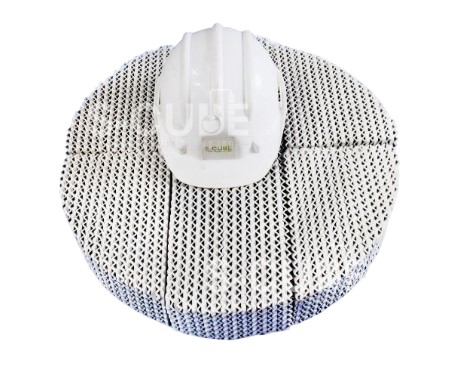 | SCM Structured Packing SCM Structured Packing is a high-performance mass transfer packing designed to provide superior efficiency in distillation, absorption, stripping,... View product → |
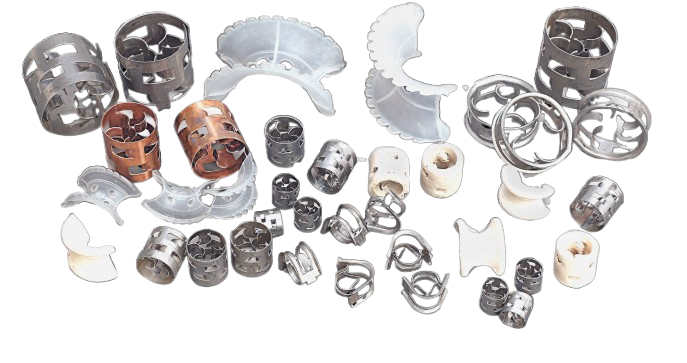 | Random Packing Manufacturer & Supplier S-Cube Mass Transfer Pvt. Ltd. is a leading manufacturer and supplier of high-performance Random Packing solutions designed... View product → |
Frequently asked questions
What is SCM structured packing?
SCM is not a universal standards-based packing grade. It identifies a supplier family of structured packing made from corrugated metal sheets or wire mesh, so you must request specific area, corrugation geometry, material, block dimensions, and performance data.
How does SCM structured packing compare with trays and random packing?
Structured packing usually offers lower pressure drop and high vapor-liquid contact efficiency, while trays provide accessible stage-by-stage operation and random packing can reduce installation complexity. The best choice depends on capacity, fouling, liquid distribution, maintenance access, and total installed cost.
When is SCM packing suitable for vacuum distillation?
Structured packing suits vacuum distillation when minimizing pressure drop protects relative volatility and column capacity. Confirm distributor performance, liquid load range, flooding margin, material compatibility, and the packing's tested pressure-drop data for the intended service.
What should a comparable SCM packing specification include?
State packing type, specific surface area, corrugation angle and height, sheet or mesh material, block size, column diameter, liquid and vapor loads, operating pressure and temperature, allowable pressure drop, efficiency target, fouling limits, distributors, redistributors, and design test conditions.
Related products
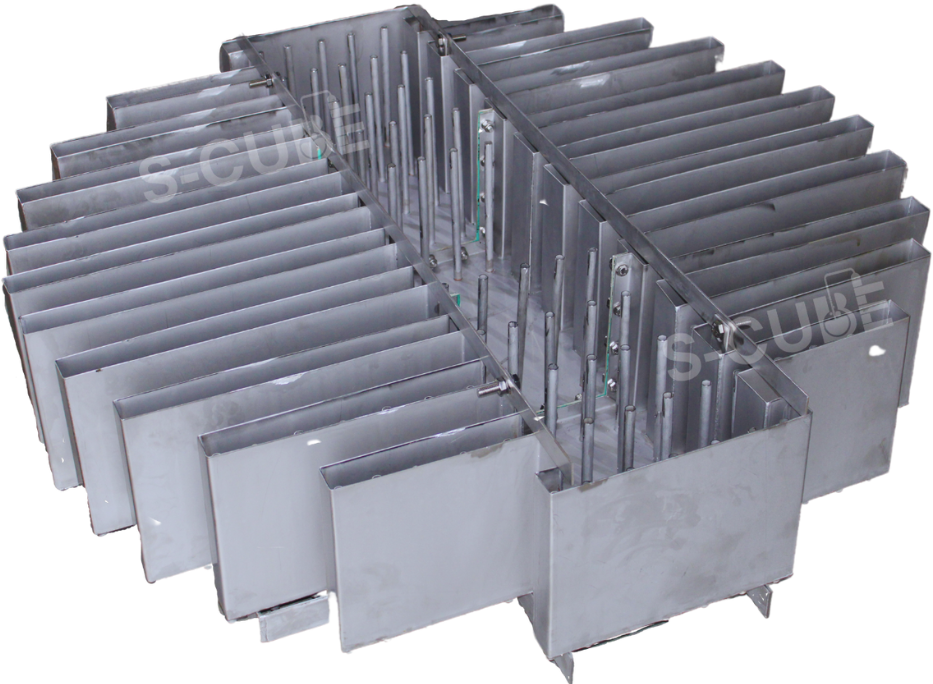 | Column Internals S-Cube Column Internals S-Cube Mass Transfer Pvt. Ltd. is a leading manufacturer and supplier of high-quality Column Internals designed to maximize... View product → |
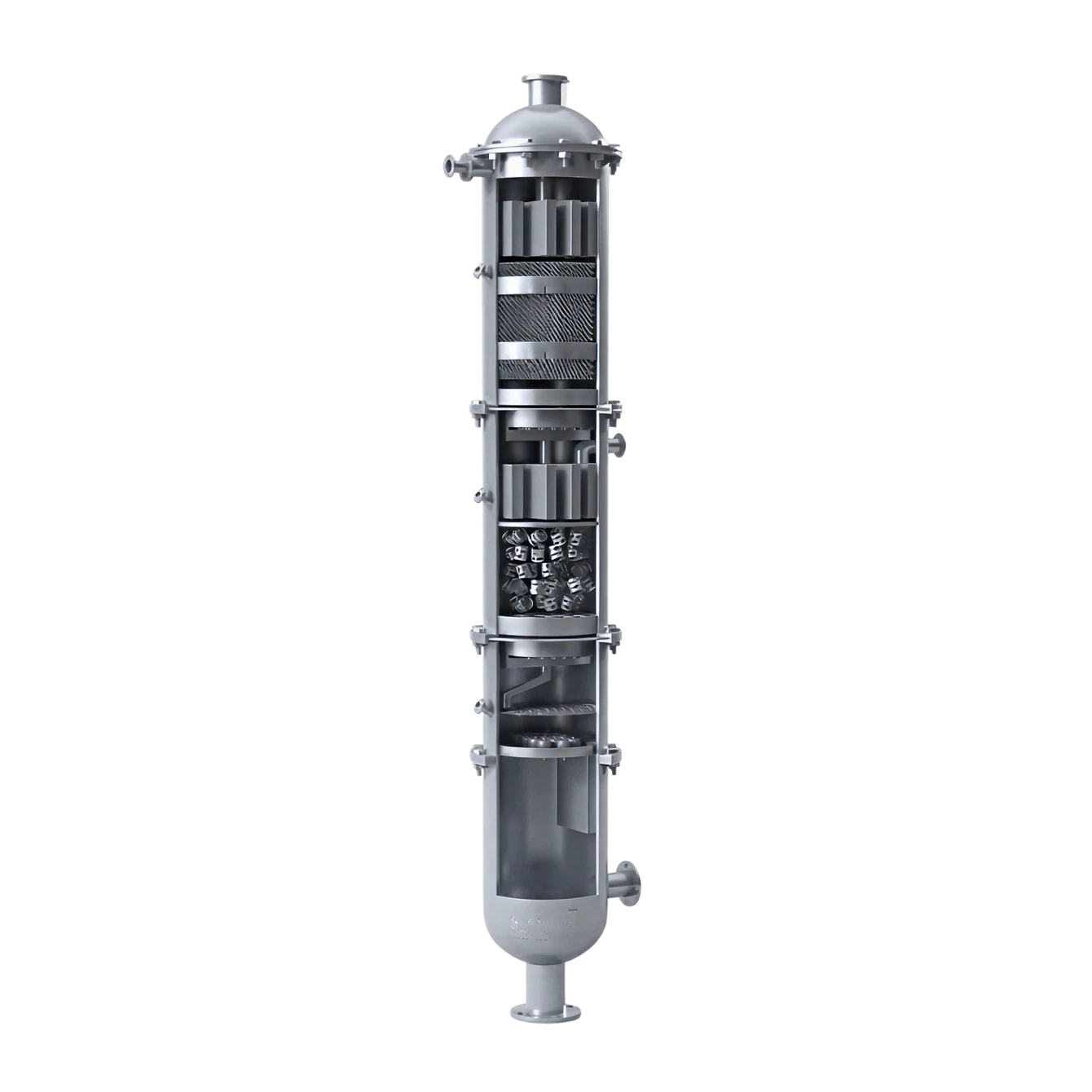 | Stripper Column S-Cube Stripper Column S-Cube Mass Transfer Pvt. Ltd. is a leading manufacturer and supplier of high-performance Stripper Columns designed for... View product → |
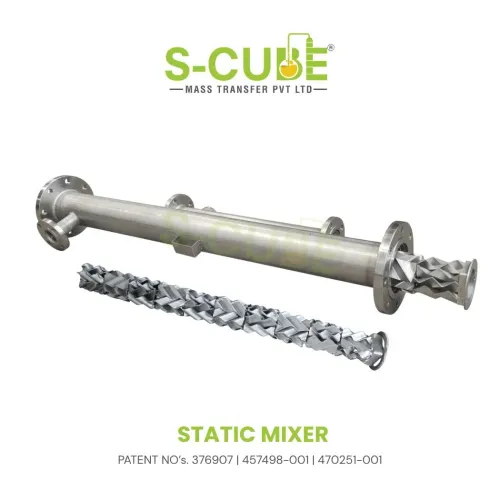
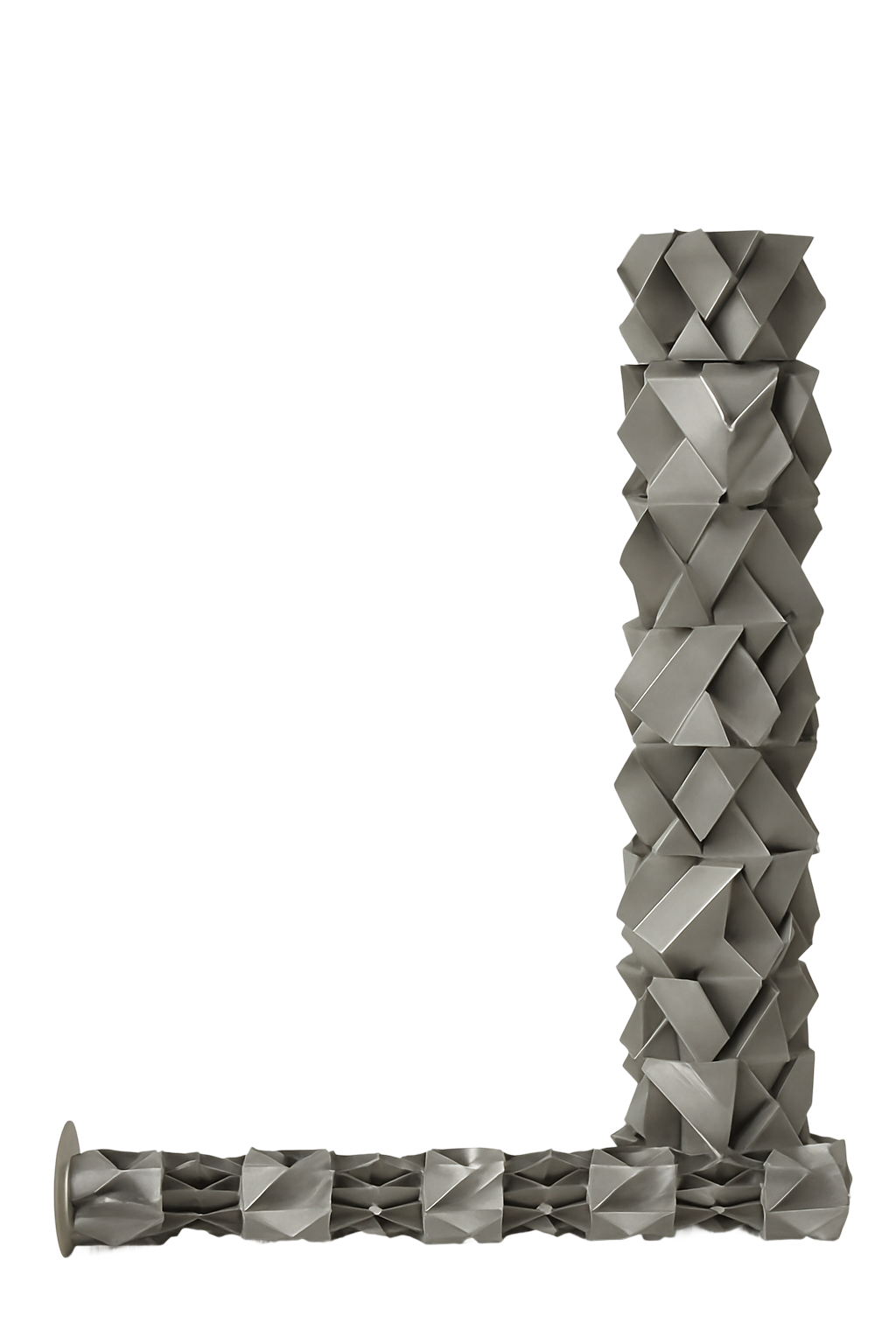 | Static Mixers S-Cube Static Mixers S-Cube Mass Transfer Pvt. Ltd. is a leading manufacturer and supplier of high-performance Static Mixers designed for efficient... View product → |
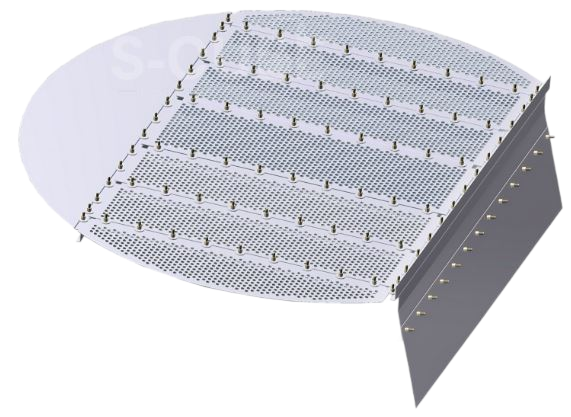 | Distillation Trays S-Cube Distillation Trays Manufacturer S-Cube Mass Transfer Pvt. Ltd. View product → |